
What Does 'Fragrance' Really Mean in Skincare? A Closer Look at the Ingredient You Can’t See

Updated: Apr 23

Fragrance Doesn't Mean What you Think
When you see the word "fragrance" or "parfum" on a skincare label, you might assume it’s just the pleasant scent that gives your cream or cleanser a fresh smell. But in the U.S., that single word can legally hide dozens (sometimes even hundreds) of undisclosed chemicals.
Why Is "Fragrance" So Vague?
Under U.S. law, cosmetic companies are allowed to use the word "fragrance" as a trade secret umbrella term. That means they don’t have to tell you what’s actually in their fragrance blend. That lack of transparency can be a problem for your health.
What Can Be Hiding Inside?
"Fragrance" can contain:
Phthalates (linked to hormone disruption)
Allergens (that trigger skin irritation or asthma)
Synthetic musks (which build up in the body and the environment)
Solvents and preservatives (that may not be listed separately)
You’ll never know unless the brand chooses to disclose it—which most don’t.
U.S. vs EU Standards
In the EU, cosmetic brands are required to list 26 known fragrance allergens by name
In the U.S., they can all be lumped under "fragrance," leaving consumers in the dark
26 substances
EU-Required Fragrance Allergen Disclosure List
From the EU Cosmetics Regulation Annex III
Amyl cinnamal
Benzyl alcohol
Cinnamyl alcohol
Citral
Eugenol
Hydroxycitronellal
Isoeugenol
Amylcinnamyl alcohol
Benzyl salicylate
Cinnamal
Coumarin
Geraniol
Hydroxyisohexyl 3-cyclohexene carboxaldehyde (Lyral -now restricted; still listed)
Anisyl alcohol
Benzyl cinnamate
Farnesol
Butylphenyl methylpropional (Lilial – now banned, but appears on legacy lists)
Linalool
Benzyl benzoate
Citronellol
Hexyl cinnamal
Limonene
Methyl 2-octynoate
Alpha-isomethyl ionone
Evernia prunastri extract (Oakmoss)
Evernia furfuracea extract (Treemoss)
In the EU, these must be listed by name on the label if present above:
• 0.001% in leave-on products
• 0.01% in rinse-off products
In the U.S., these can still be grouped under “fragrance / parfum.”
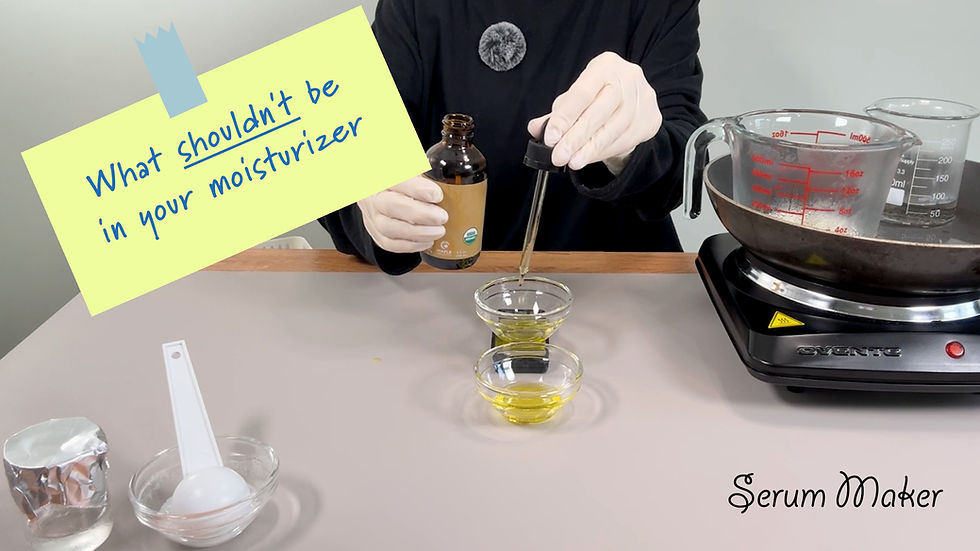
When you DIY, you know exactly what’s in your formula! (And it’s none of this scary stuff.) Want a tightening and firming serum that actually works – and doesn’t include chemicals? Take the Serum Maker Triple Boost Serum course. You’ll learn a simple recipe that will be the foundation to your DIY journey. Start today! I’ll show you how!
Should You Avoid Fragrance Entirely?
Not necessarily. But you should be informed.
Look for "fragrance-free" if you have sensitive skin.
Choose products labeled with essential oils or naturally derived scents if you want a little aroma.
Opt for brands that are transparent about their full ingredient list.
The Serum Maker Perspective
At Serum Maker, we believe transparency is non-negotiable. You should know what you’re putting on your skin—no secrets, no surprises. That’s why our DIY skincare recipes don’t just skip harmful fragrance chemicals—they teach you how to build your own clean, effective formulas from scratch.
Want to take control of your skincare? Start here to begin your clean beauty DIY journey today.



Comments